Fencing Estimate Template (2026): Free PDF + Linear-Foot Guide

Contractor Templates

Free Fencing Estimate Template

A contractor-ready fencing estimate template with linear feet, posts, panels, gates, concrete, and markup built in. Download instantly in PDF, Excel, or Google Sheets. Fill it out in under 5 minutes.

In a hurry? Price a job from a photo in about six seconds.

★★★★★ 4.8 on the App Store
SimplyWiseUpdated July 27, 20267 min read
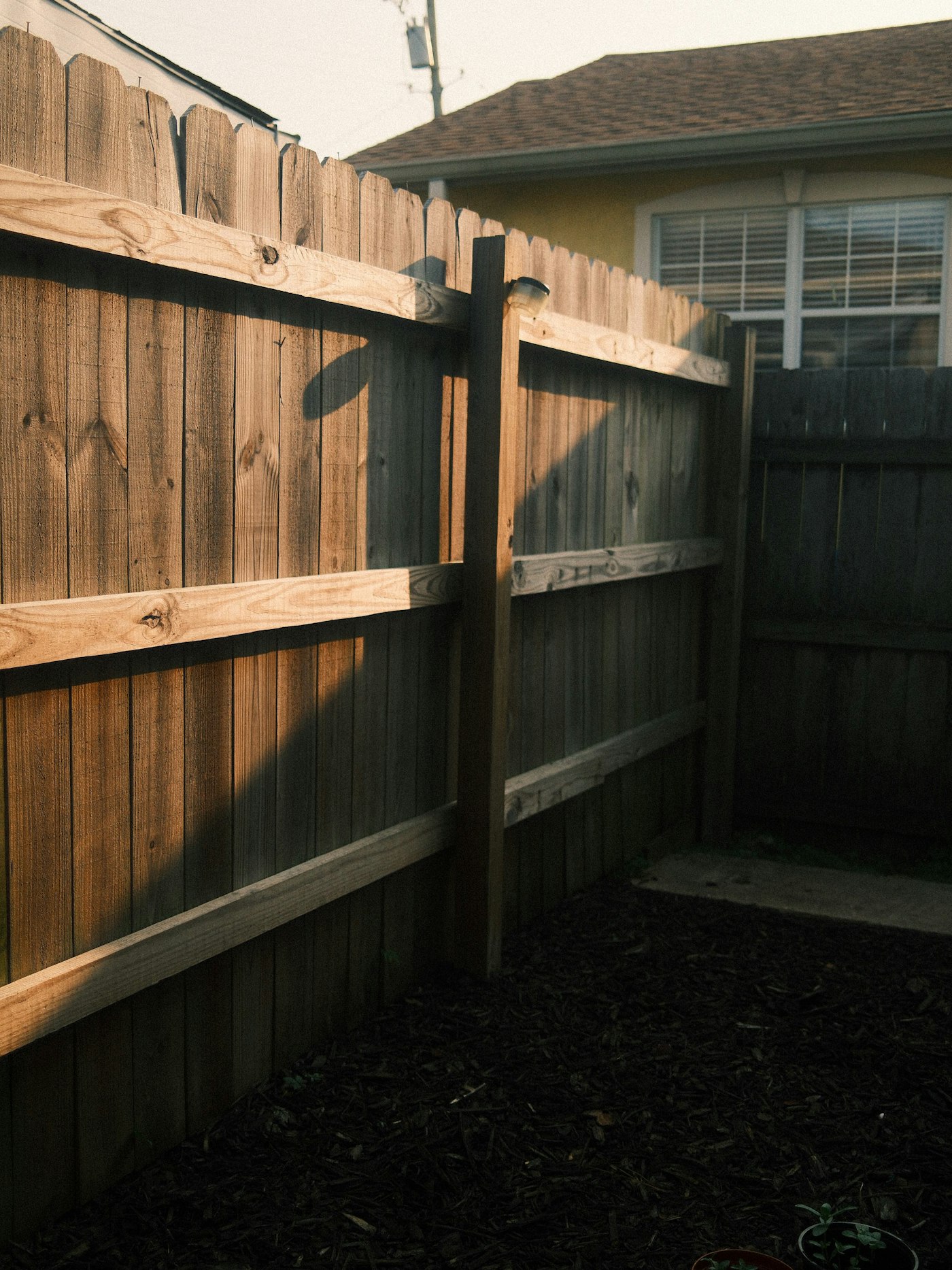
Back side of a wooden privacy fence showing posts and horizontal rails in a residential backyard

Why Fencing Estimates Fail Without a Template

Generally, fencing is the trade where bad math costs the most. Specifically, a quick lap around the yard with a tape measure feels fast, but skipping the linear-foot-to-post conversion or forgetting gate hardware turns a profitable bid into a break-even job. As a result, the fencing estimate template forces every line item onto the page so nothing gets buried in “labor and materials.”

Required line items on every fencing estimate

Company name, license number, insurance, and contact info
Client name and full project address
Scope of work (demo, post layout, install, gates, cleanup)
Total linear footage and height of the fence
Material and style (cedar privacy, vinyl, chain link, aluminum)
Picket or panel count, with waste allowance noted
Post count split between line, corner, and end posts
Rail count (typically 2 or 3 per 8 ft section)
Concrete footings (1 to 2 bags per post)
Gate count, width, and hardware (hinges, latch, drop rod)
Demo and haul of existing fence (if applicable)
811 utility locate (free call, 2 to 3 day wait)
Permit and HOA approval line items
Labor (crew size, days on site)
Slope or grade adjustment (step vs. racked panels)
Stain or sealant (if included)
Markup (typically 20 to 30 percent on materials and labor)
Subtotal, tax, and grand total
Payment schedule (deposit, mid-job, final)
Estimate validity period, warranty terms, and signature line

How to Use the Fencing Estimate Template in 5 Steps

First, use the fencing estimate template above as your line-item checklist. Then the five steps below walk through filling it out from the property walk to the signed PDF the homeowner accepts.

1

Step 1: Walk the property line and measure linear footage

First, walk the full property line with a measuring wheel, not a tape. Then mark every corner, end, and gate location with a pin flag. In addition, note the grade, root obstructions, large rocks, and any neighbor sheds, AC units, or trees within 12 inches of the line. Notably, a fence that has to dodge obstacles costs 20 to 30 percent more in labor than a straight pull. As a result, document everything before you spec material.

2

Step 2: Run the post count math

Specifically, the formula is total linear feet divided by 8, plus 1, plus extras for corners and gates. For example, a 150 ft fence is (150 / 8) + 1 = 20 line posts, plus 2 corner posts and 2 gate posts = 24 total. In addition, count corners separately because they need oversized footings (1.5 to 2x the depth). For example, a standard line post sits in a 24-inch hole, a corner post in a 36-inch hole. Generally, post counts are the single biggest source of pricing errors on fencing estimates, so put the formula on the template so the math is visible to the client.

3

Step 3: Spec materials by linear foot

Generally, fencing pricing lives in dollars per linear foot installed: pressure-treated pine privacy runs $15 to $30 per lf, cedar runs $25 to $45 per lf, vinyl runs $25 to $45 per lf, chain link runs $10 to $25 per lf, and aluminum runs $30 to $60 per lf (full 2026 per-material bands in our cost to install a fence guide). Then spec picket size (1×4 vs 1×6), rail count (2 or 3 per 8 ft section), and post material (cedar to match, pressure-treated for budget, or steel for vinyl). As a result, putting the per-lf rate next to the total tells the client exactly what they are buying.

4

Step 4: Add gates, permits, 811, and HOA

In particular, a 4 ft single gate runs $250 to $450 installed, a 5 ft double drive gate runs $700 to $1,400. However, gates are the most-undercosted line item in residential fencing because the hardware (heavy-duty hinges, latch, drop rod, gate post upgrade) doubles the material cost. Then add the 811 utility locate (a free call to 811, typically a 2 to 3 business day wait, required in every state), permit fees ($50 to $250), and any HOA submission. As a result, line-itemizing these surfaces the real timeline to the client so they do not push you to start before the locate clears.

5

Step 5: Apply markup and send a clean PDF

Finally, apply your markup (a 20 to 30 percent markup on materials and labor keeps your gross margin in line with the 20.7 to 29.9 percent averages NAHB reports for builders and remodelers). Then export a branded PDF within 24 hours of the property walk. Specifically, include the linear-foot math, post count, gate count, payment schedule (typically 30 percent deposit, 40 percent at mid-job, 30 percent on completion), warranty terms (most reputable installers offer 1 year on workmanship plus manufacturer warranty on materials), validity period, and a signature line. As a result, homeowners who see a fencing estimate with the post math on the page sign faster and stop fishing for lower bids.

Average Fencing Costs to Guide Your Estimates

Generally, these are national starting ranges to drop into your fencing estimate template. However, actual costs vary by region, material grade, soil type, and slope. As a result, use these as the floor of your estimate, then adjust up for site conditions.

Fence Type Cost per Linear Foot 150 ft Project Typical Lifespan
Chain link, 4 ft galvanized $10 to $25 $1,500 to $3,750 15 to 20 years
Pressure-treated pine privacy, 6 ft $15 to $30 $2,250 to $4,500 10 to 15 years
Cedar privacy, 6 ft dog-ear $25 to $45 $3,750 to $6,750 15 to 25 years
Vinyl privacy, 6 ft panel $25 to $45 $3,750 to $6,750 25 to 30 years
Aluminum ornamental, 4 ft $30 to $60 $4,500 to $9,000 30+ years
Composite (Trex or similar), 6 ft $40 to $75 $6,000 to $11,250 25 to 30 years
Wrought iron, 4 ft custom $45 to $90 $6,750 to $13,500 50+ years

Costs vary by region, slope, and material grade. Get an itemized fencing estimate in about 6 seconds with the SimplyWise Cost Estimator ->

Material Reference

Per-Unit Material Specs to Put on Every Estimate

Notably, fencing buyers compare on materials line by line. Therefore, list per-piece specs on the estimate so the client sees what is bid and the supplier cannot bait-and-switch the order.

Pressure-treated picket (1x6x6 ft, dog-ear)
$2 to $4 each
Cedar picket (1x6x6 ft, dog-ear)
$4 to $6 each
Pressure-treated post (4x4x8)
$10 to $15 each
Cedar post (4x4x8)
$25 to $35 each
Vinyl privacy panel (6 ft x 8 ft)
$80 to $150 each
2x4x8 PT rail
$7 to $10 each
Quikrete fast-set (60 lb bag)
$6 to $8 per bag
Heavy-duty gate hardware kit
$45 to $90 per gate

Pricing reflects Home Depot, Lowes, and regional lumberyard list prices as of Q2 2026. Verify locally before quoting. See the BLS Carpenters occupational outlook for wage benchmarks in the adjacent carpentry trades.

Linear-Foot Math: Don’t Underbid, Don’t Overshoot

In fact, the formula is the same one every fencing contractor learns on day one, but it shows up on the estimate template so the customer sees how the post count was calculated and why the gate post upgrade matters.

The formula

Post count = (Linear feet / 8) + 1 + corner posts + gate posts

First, divide the total linear footage by 8 (the standard panel spacing). Then add 1 (every fence run terminates with one more post than panels). Finally, add 1 oversized post per corner and 2 reinforced posts per gate (1 hinge-side, 1 latch-side).

Worked example: 150 ft cedar privacy with 2 corners and 1 gate
  • 150 / 8 = 18.75 sections, rounds to 19 panels
  • 19 panels + 1 termination post = 20 line posts
  • + 2 corner posts (oversized 6×6 or doubled 4×4)
  • + 2 gate posts (one per side, set deeper in concrete)
  • Total = 24 posts, with roughly 330 pickets and 57 rails

Generally, a typical residential cedar privacy fence uses about 2.2 pickets per linear foot (1×6 boards are 5.5 inches wide, set with no gap) and 3 rails per 8 ft section. As a result, a 150 ft fence needs roughly 330 pickets, 57 rails, and 44 bags of concrete (1 to 2 bags per post hole, depending on depth and frost line).

Estimating Best Practices for Fencing Contractors

In summary, six rules that turn a good fencing estimate template into a profit-protecting bid every time.

1

Call 811 before you quote a start date

Specifically, 811 is the national call-before-you-dig number. The locate is free, but the wait is typically 2 to 3 business days depending on the state (per call811.com). As a result, never quote a start date inside that window. Notably, digging without a locate can trigger state penalties and is a financial disaster if you cut a fiber line.

2

Photograph the property line before demo

First, photograph the existing fence (if any), neighboring sheds, AC units, trees, and grade. As a result, photos protect you from neighbor disputes about who owned what. In fact, boundary disputes are among the most common neighbor conflicts in residential fencing, and the photo log is your evidence.

3

Bid by linear foot, not by the job

Generally, per-lf pricing is transparent, easy to compare, and lets clients add or remove footage without re-quoting the whole estimate. For example, if the homeowner decides to skip the back run, you subtract linear feet at the agreed rate without rebuilding the bid from scratch.

4

Upcharge corner posts and gate posts

Notably, corner and gate posts take 1.5 to 2x the concrete and 4-inch wider holes than line posts. In addition, they often warrant a 6×6 or doubled 4×4 instead of a single 4×4. As a result, line-itemize each one separately at $35 to $75 more than a standard line post so the client sees the engineering, not just a flat-rate ticket.

5

Always price gates as their own line item

Specifically, a 4 ft single gate runs $250 to $450, a 5 ft double drive gate runs $700 to $1,400 installed. However, gates carry the heaviest hardware spend in fencing (hinges, latch, drop rod, gate post upgrade). Therefore, never roll gates into the per-lf rate. As a result, the template forces a separate line so gates do not eat the margin on the run.

6

Plan for slope: step or rack

Generally, fences on grade require either a “step” pattern (each panel set level with the next stepping down) or a “racked” pattern (panels angled to follow the grade). Specifically, stepped panels are faster but leave triangle gaps at the bottom. Conversely, racked panels look cleaner but cost 10 to 15 percent more in labor. Therefore, decide on the site walk and price accordingly.

Industry Perspective

Ask any veteran fencing installer where the margin went and the answer is rarely the materials. It is the line items that never made it onto the estimate. Specifically, gate hardware, oversized corner posts, slope adjustments, 811 wait time, HOA submissions, and disposal of the old fence are the line items most often forgotten.

Bake every recurring cost into the template once, and you stop bleeding margin on the small stuff.

Common Fencing Estimate Mistakes a Template Fixes

In fact, a fencing estimate template is only useful if it forces you to fill in the line items that contractors most often skip. Specifically, here are the mistakes the template is built to catch before they cost you money on the actual job.

Forgetting the 811 utility locate window

Generally, every state requires an 811 call before digging. Specifically, the wait is typically 2 to 3 business days, and quoting a ‘we start Monday’ job after a Friday locate request is how contractors end up either delaying the customer or cutting a cable line. As a result, the template line for “Project timeline” includes a sub-line for the locate so you cannot ship the estimate without addressing it.

Missing the corner-post upcharge

Notably, corner posts use 1.5 to 2x the concrete and warrant a 6×6 or doubled 4×4. For example, a 150 ft fence with 2 corners is $60 to $150 more in materials and labor than the same run with no corners. As a result, the template forces you to itemize corners separately so the upcharge is visible and accepted by the client.

Underbidding gates and gate hardware

In particular, a single 4 ft gate carries roughly $90 to $150 in hardware alone (heavy-duty hinges, lockable latch, optional drop rod for double gates). Conversely, the per-lf rate does not cover any of it. Therefore, build the gate hardware sub-line into the template so it is never an afterthought, and oversize the gate posts while you are at it.

Skipping demo and disposal

Specifically, removing an existing chain link or wood fence runs $3 to $5 per linear foot once you factor truck loads, dump fees, and digging up old concrete footings. As a result, the template separates “Remove existing fence” as its own line so it does not vanish into general labor and eat 5 to 10 percent of the margin on a replacement job.

Fencing Contracting in 2026, by the Numbers

The market context behind every fencing estimate template you fill out this year.

959K
carpenter jobs nationwide across all industries (BLS, 2024)
$20B
U.S. fence construction market (IBISWorld, 2026)
$29.12/hr
median wage for carpenters nationally (BLS OEWS, May 2025)
20-30%
gross margin band NAHB reports across builders (20.7%, FY2023) and remodelers (29.9%, FY2024)

Sources: BLS OEWS 47-2031, BLS Occupational Outlook Handbook, IBISWorld Fence Construction in the US, NAHB Cost of Doing Business studies.

Fencing Estimate Template vs. SimplyWise Cost Estimator

Generally, the free template is a perfect starting point. However, the next step up is estimating software that supports live material pricing and helps create professional estimates.

Free Template

Free

  • ✓ Pre-filled fencing line items
  • ✓ PDF, Excel, Google Sheets
  • ✓ Print or email to clients
  • ✓ Manual post count math
  • ✓ No live material pricing
Free to Try

SimplyWise Cost Estimator

7-day free trial.

  • ✓ Photo into an itemized estimate in about 6 seconds
  • ✓ live material pricing
  • ✓ Professional PDF estimates and invoices
  • ✓ Project organization for each estimate
  • ✓ Track every estimate in one place

Try the SimplyWise Cost Estimator free ->

More Free Templates for Contractors

PAINTING ESTIMATE
Coastline Painting Co.
Interior repaint, 1,800 sf$3,400
Trim and doors$680
Labor (2-person crew)$2,400
TOTAL$6,480

Painting Estimate Template

Interior and exterior paint jobs with square footage, primer, and prep built in.

Download Free Template ->

ROOFING ESTIMATE
Summit Roofing
Tear-off and disposal (22 sq)$1,540
Architectural shingles + underlayment$3,400
Labor (3-person crew)$3,200
TOTAL$8,140

Roofing Estimate Template

Tear-offs, re-roofs, and repairs with squares, underlayment, and labor itemized.

Download Free Template ->

GENERAL ESTIMATE
Foundation General Contracting
Project scope of work$24,000
Materials + permits$18,500
Labor (4-person crew)$16,800
TOTAL$62,300

General Contractor Estimate

All-purpose contractor estimate for remodels, additions, and multi-trade projects.

Download Free Template ->

Related guides for fencing contractors

Also worth a look: the electrical estimate template, plumbing estimate template, HVAC estimate template, contractor invoice template, and the trade-specific estimating app rankings for electricians, plumbing, HVAC, and roofing contractors. For job-cost benchmarks before you bid, see cost to install a fence.

Frequently Asked Questions

How do I calculate post count for a fence?
First, divide the total linear footage by 8 (standard panel spacing), then add 1 for the terminating post. For example, a 150 ft fence is (150 / 8) + 1 = 20 line posts. Then add 1 oversized post per corner and 2 reinforced posts per gate (one each side, hinge and latch).
What is the cheapest fence material for residential installs?
Generally, galvanized chain link runs $10 to $25 per linear foot installed (cheapest by a wide margin), pressure-treated pine privacy runs $15 to $30, cedar runs $25 to $45, vinyl runs $25 to $45, aluminum runs $30 to $60, and wrought iron runs $45 to $90. Specifically, pricing depends on height, gauge, and local labor rates.
Do I have to call 811 before installing a fence?
Yes. Every state requires a free 811 utility locate before any digging, no matter how shallow, because utilities can sit just inches below the surface. The wait is typically 2 to 3 business days depending on the state. Digging without a locate can trigger state penalties and leaves you on the hook for the full cost of repairing any cut line.
How deep should fence posts be set?
Generally, line posts go 24 to 30 inches deep, corner and gate posts go 36 inches. However, in northern climates, set posts below the local frost line (often 36 to 48 inches per the local building code) to prevent heaving. As a result, always verify frost depth with the local building department before quoting.
Should fencing contractors charge for estimates?
Generally, for small jobs (under 100 ft, simple replacement) free estimates are standard. However, for custom or ornamental work, complicated grades, or commercial projects, charge a $75 to $200 site-walk fee that you credit toward the job. As a result, it filters out tire-kickers and signals professionalism.
What file formats can I download this fencing estimate template in?
PDF (for sending to clients), Excel (for editing and formula-driven post count calculations), and Google Sheets (for cloud-based collaboration with crews and office staff). All three formats are free.
How is the SimplyWise Cost Estimator different from this free template?
Generally, the free template is a static spreadsheet you fill out by hand. By comparison, the SimplyWise Cost Estimator turns a yard photo into an itemized fencing estimate in about 6 seconds, supports live material pricing and helps create professional estimates for clients. In addition, SimplyWise is free to try with a 7-day free trial.
Estimate faster

Ready to save hours on every fencing estimate?

Finally, pair the free fencing estimate template above with the SimplyWise Cost Estimator. As a result, a yard photo turns into an itemized estimate in about 6 seconds. Of course, free to try.
Try the SimplyWise Cost Estimator free ->