Contractor Calculator · Stringer Cuts
Stair Stringer Calculator: Cut List and Board Length
Get the riser cuts, tread count, and board length before you mark your first 2×12.
Try SimplyWise Cost Estimator free
Free to try. Build a quote from your cut list.
Your stringer cut list
Pass: riser and run only.
Check end supports and tread span before cutting.
Meets the DCA6 5 in throat minimum.
Code check: riser 7.75 in max; run 10 in min. IRC R311.7.5.1 and R311.7.5.2.
Uses an 11.25 in wide 2×12 and 12 in of trim allowance. Fractions round to 1/16.
Enable JavaScript to change this example.
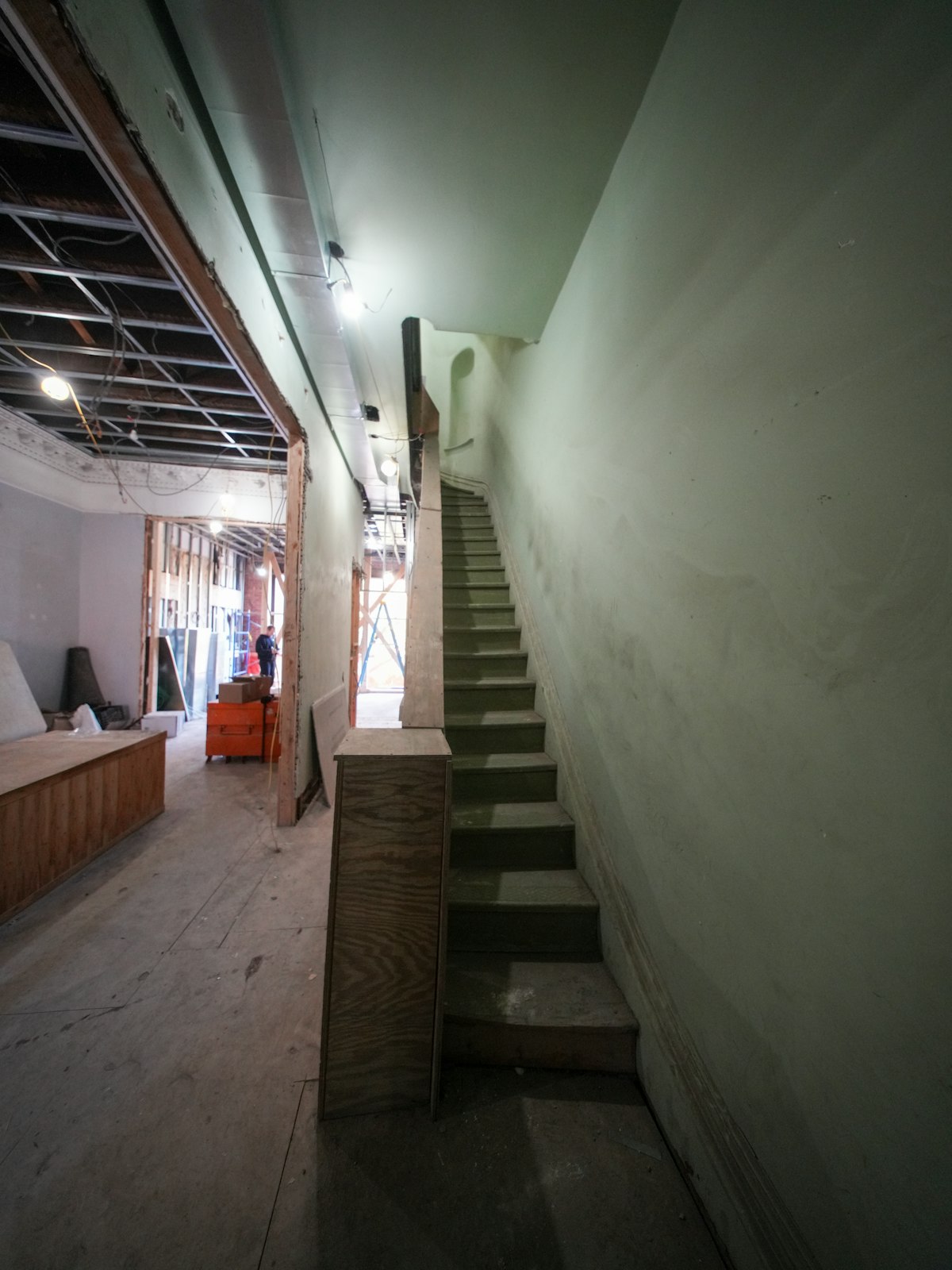
Why does the stringer get cut wrong?
A stringer carries every step, so one wrong mark repeats down the board. Use our stair calculator for the full stair plan. This stair stringer calculator focuses on the cuts and stock to buy. First, measure from the finished landing to the finished deck. Then choose the top step condition before marking wood.
How does the stair stringer calculator build a cut list?
First, divide total rise by 7.75 and round up for the riser count. Divide rise by that count for each riser. Next, multiply tread count by run. The stringer length is the square root of rise squared plus total run squared.
Then add our 12 in trim allowance and round up to a listed board length. This allowance is a planning choice, so check the end cuts. The stair angle uses one riser and one run. Throat depth means wood left below each notch.
The count uses width divided by spacing, rounded down, plus one. It does not prove edge support. So check the tread maker’s span limit and both outer stringers.
Worked cut list: a 56 in deck rise
With a 10 in run, 56 divided by 7.75 rounds up to 8 risers. Divide 56 by 8 for a 7 in rise cut. The flush option leaves 7 run cuts at 10 in each.
That gives 70 in of run and an 89.64 in diagonal. Add 12 in for 101.64 in of stock needed. So choose a 10 ft 2×12. The angle is 34.99 degrees, and the throat is 5.52 in.
For the extra top tread option, keep 8 risers but mark 8 treads. Total run becomes 80 in. Check that change against the deck connection before cutting.
Turn your cut list into a quote, free to try
Which stock length fits the rise?
This stair stringer calculator checks 8 to 16 ft boards. The table uses a 10 in run, flush top, and 12 in allowance. Heights round down to 1/16 in.
| 2×12 stock | Max total rise |
|---|---|
| 8 ft | 54 1/4 in |
| 10 ft | 69 3/4 in |
| 12 ft | 85 1/4 in |
| 14 ft | 99 5/8 in |
| 16 ft | 113 1/8 in |
These are board fit limits, not safe unsupported spans. A tiny rise change can add a whole tread. So rerun the math after a site change.
How do you mark the board with a framing square?
-
Confirm the finished rise
Measure both finished surfaces first. Include tread thickness, since bare framing can give the wrong starting height.
-
Set the square gauges
Set one gauge at the riser height and one at the run. Keep both against the same board edge.
-
Step off each notch
Slide the square along that edge, then mark each rise and run. Count the tread marks before cutting.
-
Check the ends and throat
Adjust the bottom cut for tread thickness. Check the top connection, then test the first stringer before tracing copies.
Use the fraction as a tape reference. Keep the full rise in your layout, because repeated rounding can shift the last step. Also stop saw cuts at each corner. Finish the corner by hand to preserve the throat.
Which limits apply before you cut?
The 2021 IRC caps riser height at “73/4 inches (196 mm)”. Its minimum tread depth is “10 inches (254 mm)”. Those are the limits quoted in R311.7.5.1 and R311.7.5.2.
The check covers those two limits only. Confirm local rules, landings, rails, nosings, and support details before building. For deck stringers, AWC DCA6 Figure 28 shows a 5 in minimum throat. It also limits unsupported span, so a long board does not approve a long span.
Turn the cut list into a signed quote
SimplyWise Cost Estimator turns a photo into an itemized estimate in about 6 seconds. Next, enter your checked board count and scope. Edit the material, labor, and fee lines. Then send a professional, branded quote the client signs to approve.
Pricing is $29.99/mo, $239.99/yr (about $20/mo on annual), with a 7-day free trial. For a larger project, start with the deck estimate app guide.
Keep reading
- Stair calculator: plan the full flight.
- Deck building cost: plan the broader job.
- Framing stud calculator: count wall stock.
- Plywood calculator: count sheets.
Sources
Code and board size
- ICC 2021 IRC, R311.7.5: riser and tread limits.
- AWC DCA6, Figure 28: throat and support details.
- NIST PS 20, Table 3: dry 2×12 width, 11.25 in.
Product and method
- SimplyWise Cost Estimator: App Store rating. Sources checked October 20, 2026.
- Stock sizes and trim allowance are calculator assumptions. Table values follow the same geometry.
Stair stringer calculator FAQ
Does the board length include the end cuts?
It includes a 12 in allowance beyond the diagonal. Check your top connection and bottom bearing before buying. If neither end fits, choose longer stock.
Why can the stringer count need review?
The formula rounds width divided by spacing down, then adds one. That count may leave an edge gap. Check actual centers and add support where needed.
Can I enter a fraction for the rise?
Yes. Type 56 1/2 or a decimal such as 56.5. The tool keeps the full value for math. Only the displayed fraction rounds to 1/16.
Check the cuts. Then quote the job.
Keep your board count, scope, and client approval together in a clear quote. SimplyWise Cost Estimator is free to try.