Mississippi · State License Guide
Mississippi Contractor License: Complete 2026 MSBOC Guide
One statewide board, two license paths, and a residential credential that costs less than a good pair of boots. Commercial and public work is licensed under Miss. Code Ann. § 31-3 and residential work under § 73-59, and this guide walks the whole Mississippi contractor license process end to end.
In a hurry? Price a job from a photo in about six seconds.
Verified against the Mississippi State Board of Contractors fee schedule and licensing requirements.
What is a Mississippi contractor license and who needs one?
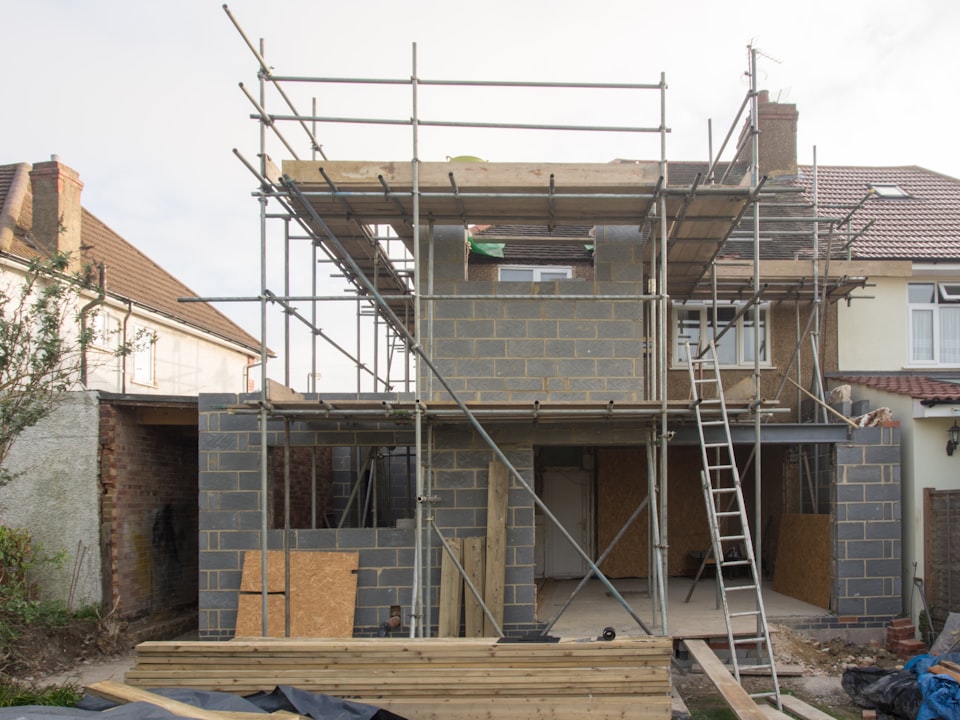
A Mississippi contractor license is issued by the Mississippi State Board of Contractors (MSBOC, msboc.us), and Mississippi licenses contractors by dollar threshold rather than by trade alone. A commercial license is required for commercial and public jobs over $50,000, and a residential license is required for new home construction over $50,000, for residential remodeling and additions over $10,000, and for residential roofing over $10,000. The two credentials are separate: the residential license and the commercial license each carry their own classifications, fees, and rules. Every applicant passes the Mississippi Law and Business Management exam plus a trade exam that matches the classification, and the board’s fee schedule lists a $50.00 fee to request a waiver of exam for those who qualify. Mississippi requires no surety bond; instead every license holder maintains general liability insurance, and commercial applicants must show at least $300,000 per occurrence and $600,000 aggregate. The application fee is $50.00 for a residential license and $400.00 for a commercial license, with license issuance included in each. The board processes applications weekly, and a license is valid for one year and renews annually, at $100.00 for a residential license and $400.00 for a commercial license. Every figure in this guide traces to the Mississippi State Board of Contractors, and you should verify any number against the board before you pay a fee.
While you map out the license, sharpen your pricing: turn a job photo into an itemized estimate in about 6 seconds. Free to try.
Mississippi keeps this simpler than most states. There is one statewide authority, the Mississippi State Board of Contractors, usually shortened to MSBOC, and it licenses both commercial and residential contractors under one roof. There is no city license patchwork to chase across the state for the licensed work, and no separate boards for general building and home building the way some neighboring states split it. If your job crosses a dollar threshold, you get licensed with MSBOC, and that license carries statewide.
The whole system runs on dollar thresholds. Below the threshold for the kind of work you do, you can legally take the job without a state license. Cross it, and you need the license in hand before the work is covered. That means the first question is never “what trade am I” and always “how big is the contract and is it commercial or residential.” Get those two answers and the rest of the guide falls into place.
One important note on who else gets pulled in. The board does not just license the general contractor. On residential jobs, the electrical, mechanical, HVAC, and plumbing subcontractors need their own residential licenses from MSBOC, and construction managers and residential solar contractors are covered too. On commercial work, every contractor and subcontractor on a covered job needs a commercial license. So “the GC has it handled” is not a safe assumption for a sub in Mississippi.
| Type of work | License needed | Kicks in when the contract is |
|---|---|---|
| Commercial construction (all trades and subs) | Commercial license | Over $50,000 |
| Residential new construction | Residential license | Over $50,000 |
| Residential remodeling and additions | Residential license | Over $10,000 |
| Residential roofing | Residential license | Over $10,000 |
| Fire sprinkler systems, public projects | Commercial license | Over $5,000 |
| Fire sprinkler systems, private projects | Commercial license | Over $10,000 |
Read that table like a contractor, not a lawyer. If you build houses from the ground up, your number is $50,000. If you do kitchens, baths, additions, or reroofs on existing homes, your number is $10,000, and that is a low bar that a single decent remodel clears easily. Commercial anything is $50,000. Those are the lines that matter for most of the trades that use this guide.
The practical read: a residential remodeler or roofer in Mississippi is going to need the license almost immediately, because $10,000 is one job. A handyman doing small repairs under those amounts can operate without the state license, but the moment a project scopes up, so does the requirement. When you are close to the line, price the full scope before you sign, not after.
Commercial vs residential: two licenses, two rulebooks
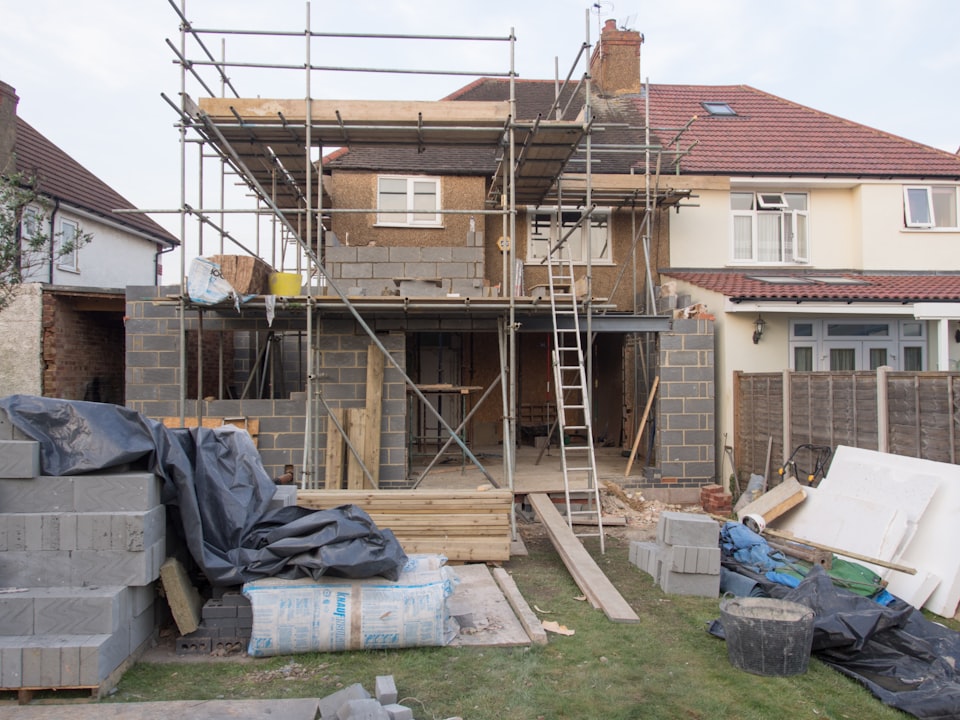
MSBOC issues two separate credentials, and they are not interchangeable. The commercial license and the residential license each have their own application, their own fee, and their own classifications. Pick the one that matches the work you actually do, or hold both if you run jobs on both sides. Getting the classification right is the whole game with a Mississippi contractor license, because you are only approved for the work you qualify for.
The residential license
The residential license covers new homes over $50,000 and remodeling, additions, and roofing over $10,000. It is the lighter path in every sense: a $50.00 application fee, no minimum insurance dollar amount written into the requirement, and a straightforward classification structure for residential builders and remodelers. For a solo builder or a small residential crew, this is the credential you are almost certainly getting, and at $50.00 it is one of the cheapest first-year contractor credentials in the entire country.
There is one crossover rule worth knowing. A residential license holder with the classification of Residential Builder is allowed to work on commercial projects, provided the job does not exceed 7,500 square feet. Past that size the work belongs to the commercial license. It is a narrow carve-out, but for a home builder who occasionally takes a small commercial job, it can be the difference between needing one credential and needing two.
The commercial license
The commercial license covers commercial and public construction over $50,000, and it is the more demanding, more expensive credential. It carries the higher application fee, the higher insurance requirement, and updated financial information at renewal. Under the commercial license you hold one or more classifications that describe the work you are approved to perform, such as building construction, highway and street, electrical, mechanical, and the various specialty trades. Each additional classification you add to your license carries its own fee.
Adding classifications
Whether you are on the commercial or residential side, you are not licensed for “everything.” You are licensed for the classifications you qualify for by exam and experience. If you want to add scope later, you file for an additional classification. On the commercial license Mississippi charges $100.00 for each additional classification, and depending on the classification you may need to pass the matching trade exam to hold it.
| Feature | Residential license | Commercial license |
|---|---|---|
| Work covered | New homes over $50,000; remodels, additions, roofing over $10,000 | Commercial and public work over $50,000 |
| Application fee | $50.00 | $400.00 |
| General liability minimum | No dollar minimum stated; proof still required | $300,000 per occurrence / $600,000 aggregate |
| Tax identification | Income tax ID, federal tax ID, or Social Security number | Mississippi Sales Tax number |
| Annual renewal | $100.00 | $400.00 |
| Financial info at renewal | Not required | Updated financial information required |
What Mississippi requires before you apply
Three things stand between you and a Mississippi contractor license: exams, insurance, and the right tax identification. None of them are exotic, but you want them lined up before you apply so the board is not sending your file back. The sections below take each one in turn, and the order below is roughly the order the work happens in, since the exam is gated by the board sending your information to the testing vendor first.
It helps to think of the application as a package rather than a single form. A complete file shows passing exam scores, a current certificate of general liability insurance, and the tax identification that matches your side of the house. Leave any one of those out and the file is incomplete, which is the most common reason a straightforward Mississippi application stalls.
How to apply for a Mississippi contractor license, step by step
Here is the whole path, start to finish, in the order you actually do it.
-
Confirm you cross a threshold
Check your typical contract size against the threshold table above. If your residential remodels run over $10,000 or your commercial jobs run over $50,000, you need the license. If you are consistently under, you may not, though scoping up mid project can change that fast.
-
Pick your license type
Decide whether you need the commercial license, the residential license, or both. Commercial covers commercial and public work over $50,000; residential covers new homes over $50,000 and remodels, additions, and roofing over $10,000.
-
Choose your classifications
Select the classifications that match the trades you perform. This drives which trade exams you sit and what the total fee is, since each additional classification costs $100.00.
-
Get your qualifier information to PSI
Return the completed application so MSBOC can send the qualifier’s information to PSI, the testing agency. No candidate may schedule an exam until MSBOC submits this information. The board then sends a Candidate Information Bulletin explaining how to schedule, which books are allowed, and where to obtain them.
-
Pass the required exams, or file for a waiver
Sit the Mississippi Law and Business Management exam plus any trade exam for your classification through PSI. A general building contractor may use the NASCLA Commercial General Building exam instead. If you qualify for a waiver, the board’s fee schedule sets a $50.00 fee to request one. Exams have to be passed before your file goes to the board.
-
Line up general liability insurance
Get a certificate of general liability insurance from your carrier. Commercial applicants need at least $300,000 per occurrence and $600,000 aggregate. Every active license holder has to maintain proof of general liability coverage to stay in good standing.
-
Provide your tax identification
Commercial applicants supply a Mississippi Sales Tax number. Residential applicants supply one of the following: a Mississippi Income Tax Identification Number, a Federal Tax Identification Number, or a Social Security Number.
-
Submit the application and wait for issuance
Send the complete package to MSBOC and pay $50.00 for residential or $400.00 for commercial, plus $100.00 for each additional classification. The board processes completed applications weekly, and the review takes approximately seven working days for approval and license issuance.
Once you are licensed and quoting real work, build the estimate straight from a job photo and keep your numbers defensible. Free to try.
Win the bid, then price it in seconds
A license lets you take the job. Winning it still comes down to a fast, credible number. The SimplyWise Cost Estimator turns a job photo into an itemized estimate in about 6 seconds, so you can quote on site while the homeowner is standing next to you. It runs $29.99 a month or $239.99 a year, which works out to about $20/mo on the annual plan, and there is a 7-day free trial. Free to try.
Exams and the NASCLA option
Every applicant, commercial or residential, takes the Mississippi Law and Business Management exam. It is the baseline test that proves you understand how to run a licensed contracting business in the state. On top of that, most classifications require a trade exam that matches the work, so a mechanical contractor sits a mechanical exam and so on. The exams are open book and administered through PSI, and the Candidate Information Bulletin the board sends after you apply spells out which books you may bring and how to schedule.
There is a reciprocity shortcut on the building side. A general building contractor may choose to take the NASCLA Accredited Examination for Commercial General Building instead of the Mississippi Building Construction exam. That is useful if you already hold or plan to hold credentials in other NASCLA states, because the same accredited exam travels.
Mississippi also allows an exam waiver in certain situations. The board’s published fee schedule lists a $50.00 fee to request a waiver of exam, so if you believe you qualify to skip a portion, that is the mechanism and that is the cost to have the request processed. It is worth asking about if you hold equivalent credentials elsewhere, because it can shorten the whole path.
| Exam or item | Who it applies to | Cost |
|---|---|---|
| Mississippi Law and Business Management exam | Every applicant | Set by PSI (see the Candidate Information Bulletin) |
| Trade exam by classification | Most classifications | Set by PSI (see the Candidate Information Bulletin) |
| NASCLA Commercial General Building exam | General building contractors (alternative) | Set by the testing vendor |
| Request for waiver of exam | Applicants who qualify to skip a portion | $50.00 (MSBOC fee schedule) |
Insurance and why there is no bond
Here is a place Mississippi is friendlier than a lot of states: there is no surety bond requirement for the license. Some states make you post a bond before you can pull a permit. Mississippi does not. What it requires instead is general liability insurance, and every applicant for a new license and every active license holder has to show proof of it to remain in good standing.
The dollar amount depends on your side of the house. Commercial applicants must provide a certificate of insurance showing minimum coverage of $300,000 per occurrence and $600,000 aggregate. Residential applicants have no minimum coverage amount stated in the requirement, though carrying real coverage is still basic business sense and many builders will hold more than the rule demands. Either way, the certificate of insurance is part of a complete application, so get it from your carrier before you file.
| License type | Surety bond | General liability requirement |
|---|---|---|
| Residential | None required | Proof of coverage required; no dollar minimum stated |
| Commercial | None required | $300,000 per occurrence / $600,000 aggregate |
The practical read: because there is no bond to post, your real insurance cost in Mississippi is the premium your carrier charges for general liability, not a bond fee to the state. Order the certificate early. A missing or expired certificate is one of the quiet reasons an otherwise complete application does not clear.
Business setup and tax identification
The board also wants to see that you are set up to do business and pay taxes in the state, and the tax identification you provide is different on each side of the house. Commercial applicants provide a Mississippi Sales Tax number. Residential applicants provide one of the following: a Mississippi Income Tax Identification Number, a Federal Tax Identification Number, or a Social Security Number. Have the right number ready before you file so the application is complete on the first pass.
Beyond the license itself, running a contracting business in Mississippi means the ordinary groundwork any trade sets up: an entity or a sole proprietorship, the tax registrations that match it, and the local permits each individual job requires. The license from MSBOC is the credential that lets you contract for the work above the thresholds; it does not replace the building permit you still pull for a given project. Keep the two mentally separate, because they run on different timelines and different desks.
Annual renewal and inactive status
Mississippi licenses run annually. Your license is valid for one year and you renew it every year to keep it active. The board emails renewal notices to current licensees approximately 60 days before the license expires, but that reminder is a courtesy. The responsibility to renew on time is yours whether the email lands or not, which is why the board tells licensees to keep a valid email address on file.
Residential renewal is $100.00, and if you miss the deadline the late fee is $10.00. Commercial renewal is $400.00 with a $50.00 late fee. You can download, complete, and mail a renewal form, or renew online through the website. If you renew online, you have to both submit payment and upload all the required documents in the same pass.
There is a hard outer limit on a lapsed residential license worth marking on the calendar. A residential license may be renewed up to 180 days after the expiration date. A residential license that has been expired for more than 180 days cannot be renewed at all and requires submission of a new application, which means back through the process rather than a simple late payment. A missed date is recoverable if you act inside that window; miss the window and you start over.
Two more renewal details catch people. First, commercial renewals require updated financial information, so a commercial license is something you re-qualify for each year, not just re-pay. Second, if you are not actively building, you can request that the board move your license to inactive status for a $25.00 fee, but inactive licensees are still on the hook for the annual renewal fee. Inactive does not mean free.
Working unlicensed and board discipline
Mississippi built this system around thresholds precisely so it can enforce them. Once your work crosses the dollar line, the license is not optional, and the board handles complaints and investigations against contractors who operate over the threshold without one.
The board processes complaints based on severity and the date they are received, and each complaint is reviewed to determine whether it falls within the board’s jurisdiction before it moves forward. When a disciplinary hearing concludes and a violation is found, the board states that discipline may include fines or penalties, suspension, revocation, a letter of reprimand, probation, or other discipline. The findings of fact, conclusions of law, and order are then mailed to both the contractor and the complainant.
There is a defined appeal path if you disagree with a decision. A contractor has ten days from the date of the board’s decision to appeal, pursuant to Miss. Code Ann. § 73-59-13(11) for residential matters or Miss. Code Ann. § 31-3-23 for commercial matters. In plain terms, this is a real regulator with a real process, and an unlicensed contractor on a covered job is exposed to board action on top of the ordinary business risk of a dispute where you have no license to stand behind.
Straight talk: the board reviews consequences case by case under state licensing law rather than publishing a single flat fine on its public FAQ. If you are close to a threshold or unsure whether a job is covered, the honest move is to call the board and ask before you sign, not after a complaint lands. The license itself is cheap. The cleanup from working without one is not.
Mississippi contractor license fees, itemized
Mississippi publishes a flat fee schedule, and the numbers below are read directly from it. The schedule has been effective since January 1, 2016, so these are stable figures rather than a moving target. The headline is how cheap the residential path is and how the commercial path costs eight times as much to enter.
| Fee | Amount |
|---|---|
| Residential application (license issuance included) | $50.00 |
| Commercial application (license issuance included) | $400.00 |
| Additional classification | $100.00 |
| Residential license renewal | $100.00 |
| Residential renewal late fee | $10.00 |
| Commercial license renewal | $400.00 |
| Commercial renewal late fee | $50.00 |
| Request for waiver of exam | $50.00 |
| Transfer to inactive or active status | $25.00 |
Notice a quirk worth planning around: the residential application is $50.00 but the residential renewal is $100.00, so year two costs more than year one. On the commercial side the application and the renewal are both $400.00, so the cost is steady. Neither side charges a separate issuance fee. The application fee is the fee, and your license comes with it.
Budget the real first year: for a residential builder, the state cost to start is $50.00, plus your exam vendor fees to PSI and your insurance premium, which you pay to a carrier, not to the board. For a commercial contractor, the state cost to start is $400.00 for one classification, plus $100.00 for each additional classification you carry.
By national standards, Mississippi is a bargain on the residential side and middle of the pack on commercial. Across the states that have a statewide credential you can price, the median first-year cost is about $176, and the range runs from roughly $25 at the low end to about $900 at the top. Mississippi’s $50.00 residential path lands near the very bottom of that spread, which is one more reason a small residential builder here has little excuse to skip the license.
See how Mississippi compares in all 50 states in our full contractor license cost breakdown.
Statewide license and local permits
The Mississippi contractor license is a statewide credential. Once MSBOC issues it, you do not get re-licensed city by city for the work the license covers; the credential carries across the state. That is one of the genuine conveniences of the Mississippi system compared with states that layer a municipal contractor license on top of the state one.
What does not disappear at the local level is the building permit. Individual cities and counties still issue the permits for specific projects through their own building departments, and permit requirements, inspections, and fees are set locally rather than by the board. Some municipalities also require a general privilege or business license to operate in town. Because those local rules and amounts vary from one jurisdiction to the next, the reliable move is to confirm permit and privilege-license requirements with the local building department for the city or county where the job sits, rather than assuming the state license is the only paperwork a given project needs.
Common pitfalls to avoid
Most Mississippi license trouble is not exotic. It comes from a handful of predictable mistakes, and every one of them is avoidable if you know it is coming.
- Treating the $10,000 residential trigger like the $50,000 one. Remodels, additions, and roofing cross the line at $10,000, not $50,000. That is one job for most remodelers, so the license requirement arrives far earlier than builders expect.
- Assuming the GC’s license covers you as a sub. Residential electrical, mechanical, HVAC, and plumbing subs need their own MSBOC licenses on covered residential work, and every sub on a covered commercial job needs a commercial license.
- Letting a residential license lapse past 180 days. Inside 180 days you can still renew. Past 180 days the license cannot be renewed and you must submit a new application, which is a much longer road than a late fee.
- Forgetting that commercial renewal needs updated financials. A commercial license is re-qualified each year with updated financial information, not just re-paid, so budget the time to assemble it.
- Budgeting only the state fee. The $50.00 or $400.00 application is the state’s cut. Your real first-year cost also includes PSI exam fees and your insurance premium, both paid to third parties.
- Working right up to a threshold without pricing the full scope. A job that starts under the line and grows can push you over it mid project. Price the whole scope before you sign so a change order does not turn a legal job into an unlicensed one.
Bottom line
Mississippi runs one statewide board, MSBOC, and licenses by dollar threshold: commercial over $50,000, and residential remodels, additions, and roofing over $10,000 with new homes over $50,000. Every applicant passes the Law and Business Management exam plus a trade exam, carries general liability insurance instead of a bond, and pays $50.00 residential or $400.00 commercial, issuance included. The board works applications weekly and issues in about seven working days. Renewal is annual, $100.00 residential and $400.00 commercial, with a hard 180-day window on a lapsed residential license. It is one of the cheapest first-year credentials in the country.
Sources
- Mississippi State Board of Contractors, Frequently Asked Questions (thresholds, exams, insurance, tax identification, processing time, renewal, inactive status, complaints and discipline, appeals). Accessed July 23, 2026.
- Mississippi State Board of Contractors, Fee Schedule (effective January 1, 2016) (all application, renewal, late, additional classification, exam waiver, and status fees). Accessed July 23, 2026.
- SimplyWise, Contractor License Cost by State (national median and range used for the cross-state comparison).
In Mississippi the license is the cheap part. A $50 residential application is one of the lowest first-year costs in the country, and the real risk is treating the $10,000 remodel threshold as if it were the $50,000 one.
SimplyWise Editorial Team
Frequently asked questions
Do I need a Mississippi contractor license for small jobs?
Not always. Mississippi licenses by dollar threshold. Residential remodeling, additions, and roofing need a residential license once the contract goes over $10,000, and residential new construction needs one over $50,000. Commercial work needs a commercial license over $50,000. Below those amounts you can generally take the job without a state license, though a larger scope can push you over the line.
How much does a Mississippi contractor license cost?
The residential application is $50.00 and the commercial application is $400.00, with license issuance included in each. Adding a classification costs $100.00. Renewals are $100.00 residential and $400.00 commercial each year. These figures come from the board’s published fee schedule.
Does Mississippi require a surety bond?
No. Mississippi does not require a surety bond. It requires general liability insurance instead. Commercial applicants carry $300,000 per occurrence and $600,000 aggregate, and residential applicants have no minimum coverage amount stated in the requirement, although carrying real coverage is still smart business.
What exam do I have to pass for a Mississippi contractor license?
Every applicant takes the Mississippi Law and Business Management exam, and most classifications add a matching trade exam. The exams are open book and administered through PSI. A general building contractor may use the NASCLA Commercial General Building exam instead. The board’s fee schedule lists a $50.00 fee to request a waiver of exam for those who qualify.
How long does it take to get licensed in Mississippi?
The board processes completed applications weekly and advises allowing approximately seven working days for approval and license issuance once you have a complete application on file with passing exam scores. Most of the real timeline is on your side of the process: scheduling and passing exams and gathering your insurance and tax documents.
How often do I renew my Mississippi license?
Annually. The license is valid for one year. The board emails renewal notices about 60 days before expiration, but renewing on time is your responsibility. Residential renewal is $100.00 with a $10.00 late fee, and commercial renewal is $400.00 with a $50.00 late fee. A residential license can be renewed up to 180 days after expiration; past that it requires a new application.
License first. Then bid every Mississippi job with a sharper estimate.
The SimplyWise Cost Estimator turns a photo into an itemized estimate in about 6 seconds, so a licensed contractor can quote on site and win the work while the crew is still standing in the driveway. Free to try with a 7-day free trial.